
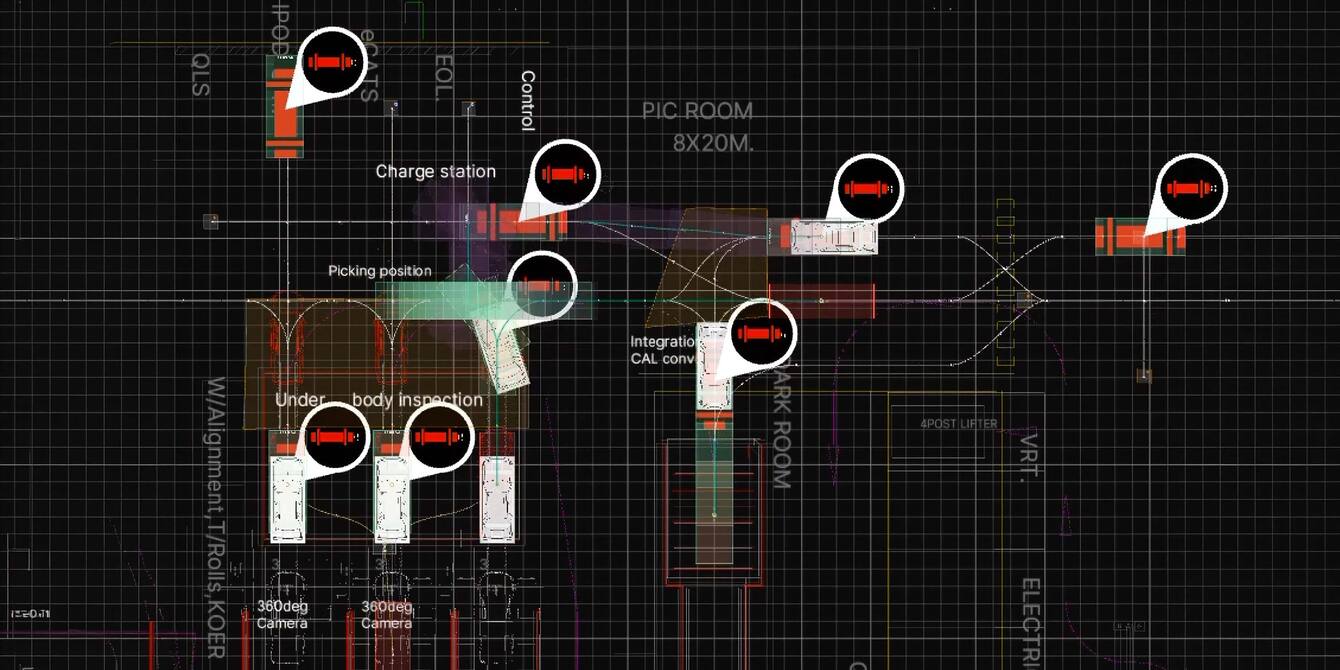
When planning a new automotive production facility, much of the focus is naturally on production capacity, process efficiency and automation. But one important factor can have a major impact on all three: how vehicles move between production steps.
Traditionally, this has often meant designing the factory around fixed conveyor systems. They can be effective for established production flows, but they also tie vehicle movement to the physical infrastructure. As manufacturers face increasing demands for flexibility, scalability and shorter product life cycles, there is a growing need to rethink this approach.
Stringo Automated offers another way to move vehicles through the factory – one that can be planned into the production layout from the very beginning.
Involve vehicle movement early
Stringo is typically involved early in automation projects, often during feasibility study and layout design. This creates the opportunity to assess vehicle movement before key decisions about the factory layout and transport infrastructure are locked in.
“Early involvement allows us to create the greatest value. By understanding the vehicle fleet, the operating environment and the transport requirements before the solution is locked in, we can help optimize the overall flow and avoid costly modifications later,” says Magnus Grafström, CTO at Stringo.
The approach also changes how vehicle movement is considered in the overall factory design. Instead of treating transport as a separate function, production processes and vehicle flows can be planned together. Aisles, workstations, buffer zones, charging stations, floor conditions and traffic flows can all be optimized around the intended system.
The result is a production environment designed to support efficient vehicle movement, rather than one that the transport solution must simply adapt to.
Beyond the conveyor
Conveyor systems remain a suitable choice for many applications. However, their fixed infrastructure can make future changes expensive and time-consuming. When production requirements evolve, changing the flow may mean modifying the physical installation itself.
Stringo Automated takes a different approach. Autonomous vehicle movers transport vehicles between defined locations, allowing the flow to be adapted without rebuilding the transport infrastructure.
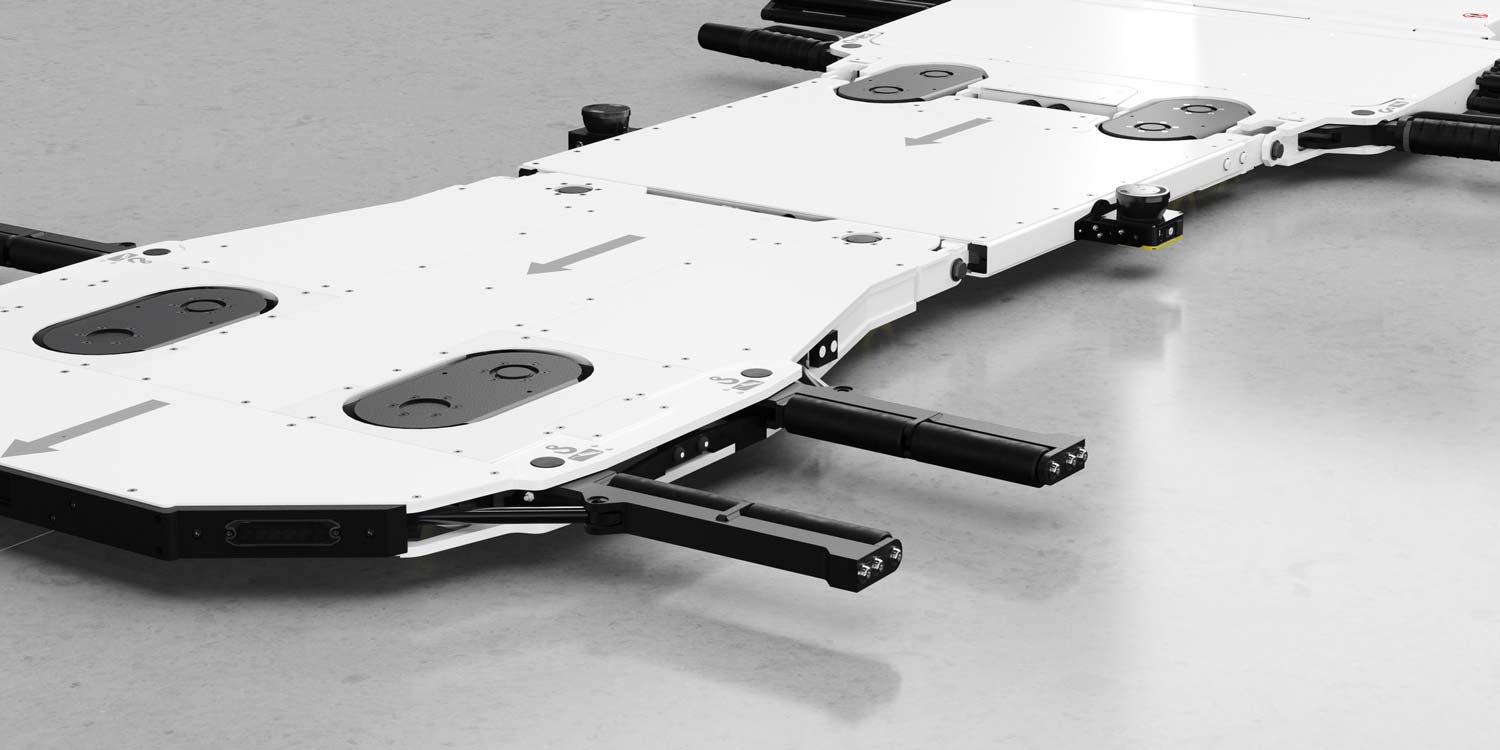
In suitable applications, Stringo Automated can replace traditional conveyors rather than simply complement them. This is particularly relevant in parts of the production flow where the vehicle already has its wheels fitted and can be transported as a complete vehicle.
One of the clearest opportunities is in end-of-line operations, including transport to calibration, quality control, repair and buffer areas. In many automotive plants, these movements are still performed by operators driving vehicles between production steps.
“By automating these movements, manufacturers can improve safety, reduce operating costs and scale capacity more easily without major changes to the factory layout,” says Grafström.
Uptime starts with the flow
In automotive manufacturing, uptime is critical. Vehicle movement connects different production processes, and a disruption in one part of the flow can affect several downstream operations.
That makes availability a design consideration from the start, not something to address after installation.
A fleet-based approach offers one potential advantage. Rather than relying on a single critical transport unit, tasks can be reassigned across the available Stringo units when one unit requires servicing or an unexpected disruption occurs. This can help maintain the flow, depending on the fleet configuration and the requirements of the application.
System design also needs to account for throughput, safety, process flow and charging strategy. For autonomous operations, battery capacity and charging schedules must be carefully planned to support the required availability over time.
The objective is not simply to automate a transport task. It is to create a robust solution that supports the performance of the wider production system.
More than automation expertise
Automating vehicle movement requires more than selecting a vehicle mover and integrating it into a control system. The vehicle itself, the surrounding environment and the transport assignment all influence how the solution must be designed.
Wheelbase, weight, weight distribution, tires, ground clearance and vehicle variants can all affect safe and reliable movement. These factors have become particularly important in production environments where different vehicle models may share the same transport system.
Stringo brings 40 years of experience moving vehicles in production and logistics environments. That experience provides specialist knowledge of how vehicles behave, how they can be handled safely and what is required to move them reliably through an industrial facility.
“System integrators are experts in automation. We are experts in moving vehicles,” says Grafström.
That expertise complements the work of the OEM and system integrator. The manufacturer defines its production objectives, the system integrator designs the overall solution, and Stringo contributes specialist knowledge of vehicle movement and how it affects the wider flow.
As Grafström explains, the vehicle mover is only one part of the solution. The real value comes from understanding the entire production flow and how transport affects capacity, flexibility and robustness.
Design for what comes next
The automotive industry is changing rapidly. Manufacturers need to handle more vehicle variants, shorter product life cycles and fluctuating production volumes while maintaining efficiency and competitiveness.
“I would start by designing for flexible vehicle flows,” says Grafström. “Historically, production systems were often optimized for high volumes and a limited number of vehicle variants. Today, manufacturers must be able to introduce new vehicle programs and adjust production volumes without extensive changes to the infrastructure.”
This development is expected to increase the adoption of autonomous vehicle movement in the coming years.
“Stringo Automated allows manufacturers to adapt transport capacity and production flows as requirements change. Rather than building the transport flow into fixed infrastructure, they can scale and reconfigure the system as their production needs evolve.”
Grafström believes the market may still underestimate Stringo’s role in automation projects.
“Many people know Stringo for our manual vehicle movers. What they may not yet fully realize is that we now also offer a solution for automated vehicle movement. By combining that technology with 40 years of experience in vehicle movement, we can contribute specialist knowledge that goes far beyond the equipment itself and helps optimize the wider production flow.”