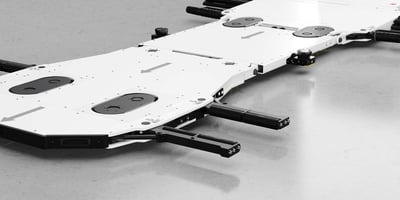
When planning your new or upgraded automotive facility, how much thought have you given to vehicle flow? Stringo's R&D team shares how addressing it at the design stage helps prevent costly workarounds, and why the right question isn't 'which vehicle mover?' but 'what problem are you trying to solve?'
There are hundreds of decisions involved in planning a new production facility, testing lab, or storage space — from building layout and heavy equipment placement to door widths and floor transitions. In that process, one question tends to get pushed to the back of the queue: how will we move non-drivable vehicles through this space?
Tomas Höglund, Manufacturing Preparation Engineer at Stringo, illustrates what can go wrong when vehicle flow is an afterthought:
“A door that’s a few centimeters too narrow or a pillar in the middle of the factory floor can make it impossible to use the path and equipment you intended. You don’t want to discover that kind of thing when the first shift is about to start.”
Key factors to consider when planning a vehicle flow
To evaluate your needs and detect potential challenges, you need to look at three things in combination:
- The vehicles themselves – What are the dimensions (length, weight, tire width, ground clearance etc.) of the vehicles you’ll be moving in the facility?
- Your operative reality – How frequently will vehicles need be moved? Over what distances? How long are the working shifts?
- The production environment – What does the intended route look like — step by step? What floor materials, door widths, slopes, thresholds, and corners will the vehicles encounter along the way?
Many common scenarios can be handled by selecting the right model and configuration for your vehicle mover. But there are situations where it’s smarter to adjust the environment rather than the machine. Tomas shares an example:
"A customer wanted to purchase a Stringo to move cars between different levels of their facility. When we analysed the ramps, it was clear the crests were too sharp for the machine to clear safely. In this case, the best solution was to round off the ramp crests. A relatively minor adjustment to the building, and everything worked perfectly."
A collaboration that starts on the drawing board
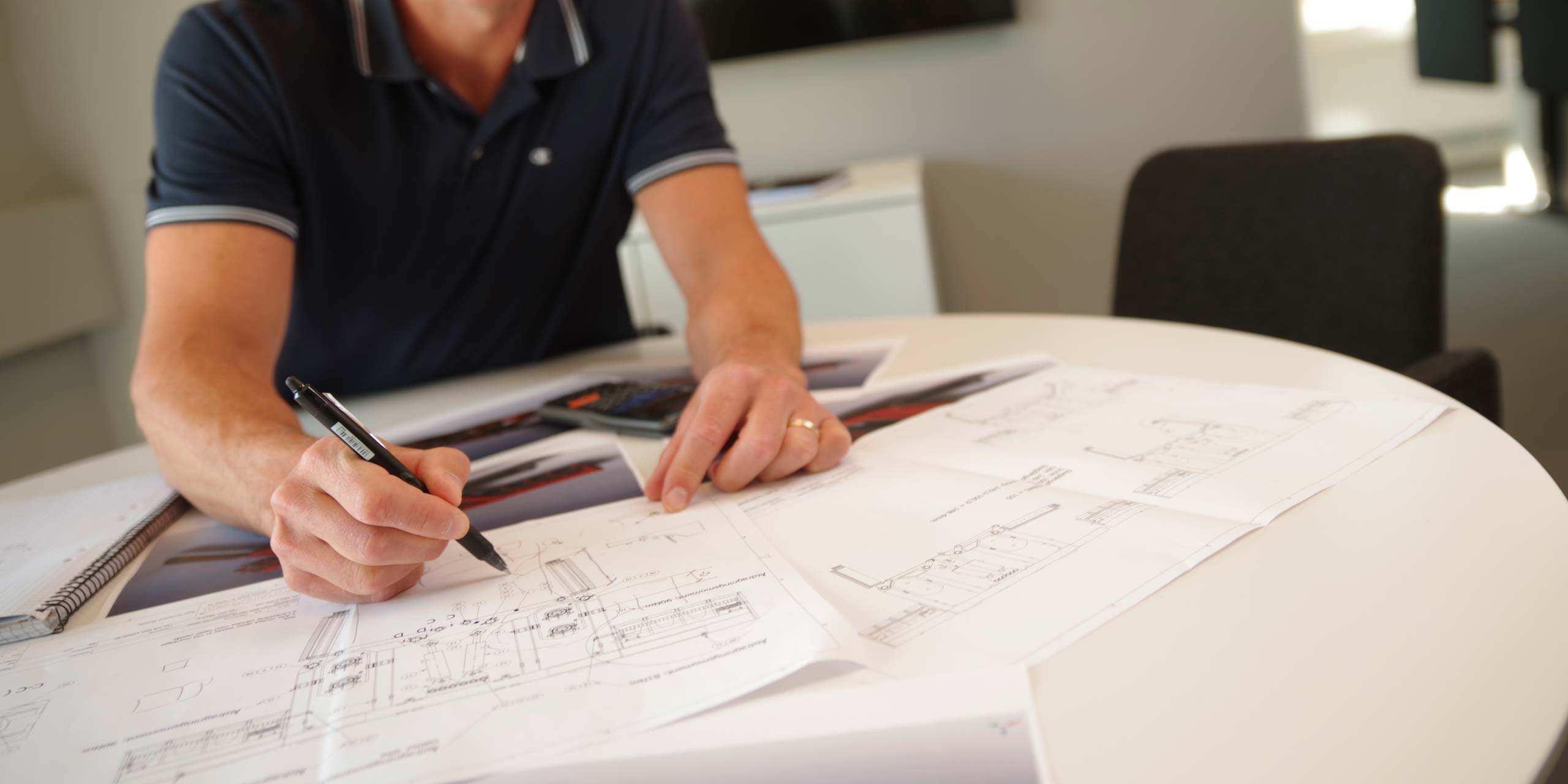
Often, it's not a matter of adapting the environment or the vehicle mover, but a combination of both. Getting that balance right is easier the earlier the conversation starts — something both Stringo and their customers have come to recognise over the years.
Magnus Grafström, Stringo’s CTO, describes a gradual change in the company’s relationship to automotive customers, primarily in the manufacturing or testing segments:
“In the past, the typical scenario was a customer coming to us with a facility already in place, asking which vehicle mover to get. Today, we're brought in as early as when the architects are drawing up the building.”
This reflects Stringo’s strong position as a trusted partner to the automotive industry, Magnus continues:
“Many of our customers have used our machines for a long time, and want to make sure they’ll be able to use them optimally in their new facilities. The conversation has shifted from 'which machine do you need?' to 'what problem are you trying to solve?’”
From CAD to confirmation: vehicle flow planning in practice
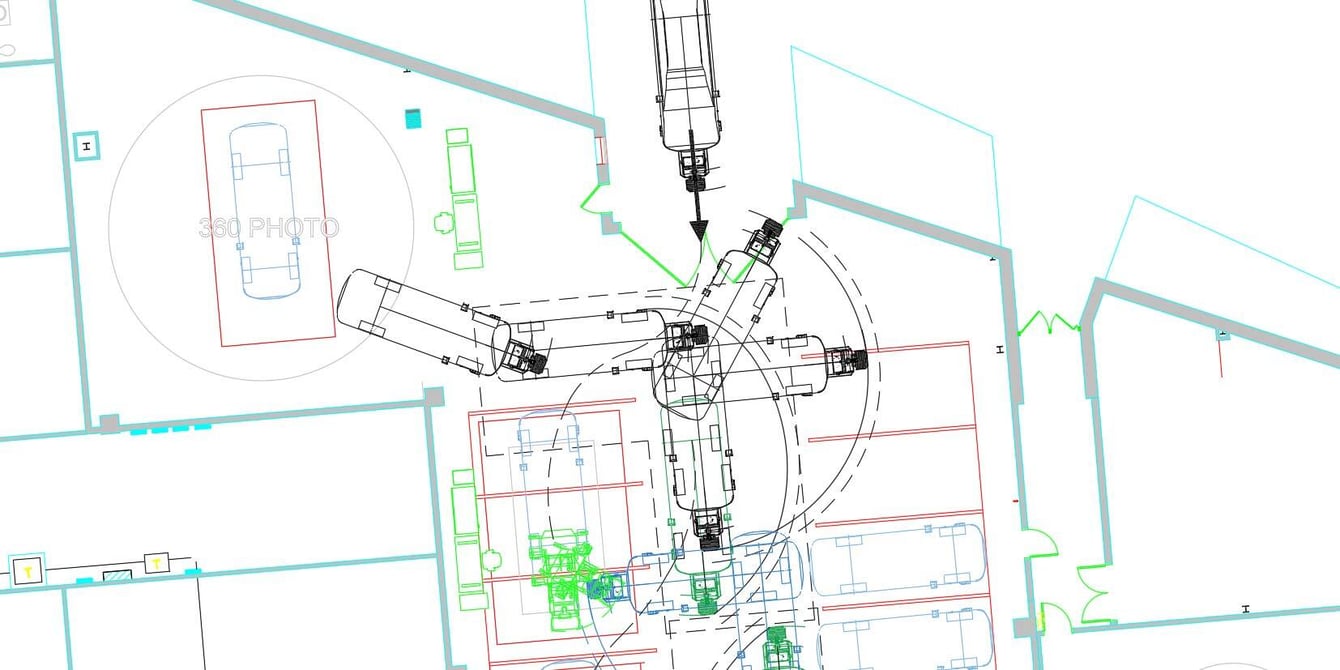
The process typically starts with the customer sharing layout drawings (usually a 2D floor plan) of the facility they’re planning to build, or redesign. Stringo’s R&D team then runs CAD simulations based on the intended vehicle flow to determine whether the planned route is actually workable. For example, does the vehicle mover have enough room to turn with a car? Can it clear the ramp crest without bottoming out? Does the loaded length fit through every passage along the route?
Alongside the spatial analysis, there are calculations to run on battery capacity (matching charge time and battery size to shift patterns and distances), ground pressure (important for sensitive floor materials), and traction on slopes (accounting for surface material, gradient, and vehicle weight).
"From a vehicle-moving perspective, we think about things that customers often haven't considered," says Magnus. "That's not a criticism. They have their area of expertise, and we have ours. It's the collaboration that provides the best solutions."
But not everything can be resolved on paper. Stringo also performs on-site validations to verify that everything works as intended before handover:
"Some environments are hard to fully predict from drawings alone," says Tomas Höglund. "With steep ramps and heavy vehicles, for example, it's not just about whether the machine can pull the car up. You also need to know it can brake safely on the way down. Those are things we verify on site. We need to make sure the solution doesn’t just fit the facilities, but is safe for the people working there."